A barn wedding already has something many venues spend a fortune trying to recreate: character. Timber beams, open countryside, old stone, high ceilings and that wonderfully relaxed feeling of having escaped somewhere for the day.
The bar should belong there too.
The best mobile bar ideas for a barn wedding aren’t necessarily the biggest or most elaborate. They’re the ones that feel at home in the setting, serve the drinks your guests genuinely want and keep the celebration flowing without turning an atmospheric corner of the barn into a queue.
The quick version: for most barn weddings, start with a characterful horsebox bar, rustic pop-up bar or bespoke indoor bar that complements the venue rather than competing with it. Add a concise drinks menu with draught beer, wine, spirits, a couple of signature cocktails and genuinely good alcohol-free choices. Then think about the less glamorous details — guest numbers, bar position, staffing, power, water, access and the British weather. Get those right and your wedding bar becomes part of the experience rather than simply somewhere to buy a drink.
A good barn wedding bar does three jobs at once: it looks right in the space, gives guests something they’ll enjoy and serves them quickly enough that nobody misses the party.
At Near & Far Mobile Bar, we think the bar can be one of those little gathering places that gives a wedding its rhythm. Guests arrive and meet there. Friends catch up there. Someone orders the first round. Later, ties loosen, heels come off and the same bar becomes part of the evening celebration.
So, what should yours look like?
Why Mobile Bars Work So Well at Barn Weddings
Barns and mobile bars are rather natural partners.
Unlike a conventional hotel wedding, where the bar is permanently fixed to one wall, a barn gives you freedom. Depending on the venue, layout and season, your wedding mobile bar might sit inside beneath timber beams, just outside the main doors, beside a courtyard or in a field overlooking the countryside.
That flexibility is useful, but there’s an aesthetic advantage too.
A shiny generic function-room bar can feel oddly formal against weathered stone and old timber. A rustic bar, converted horsebox or carefully styled wooden pop-up bar can complement those materials instead.
The result feels intentional.
For couples planning a celebration through our wedding mobile bar service, it’s worth thinking beyond “Where will people get their drinks?” and asking:
- Where will guests naturally gather?
- What will they see when they first approach the bar?
- Does its style complement the barn?
- Can it comfortably handle our guest numbers?
- Will people be able to reach it easily from both the dining and dancing areas?
- What happens if everyone decides they want a drink at once?
- Can it work indoors, outdoors or across both spaces?
Those questions lead to much better decisions than choosing a bar purely because it photographs well.
Because it needs to work at 9:30pm with 100 thirsty wedding guests too.
1. Make a Horsebox Bar Part of the Scenery
Few mobile bar formats suit the British countryside quite like a horsebox bar.
There’s an obvious visual connection. A converted horse trailer already belongs to the language of farms, fields, barns and rural life, so it can look as though it was always supposed to be there.
That makes a mobile horsebox bar particularly appealing for:
- country weddings;
- farm wedding venues;
- rustic barn celebrations;
- outdoor drinks receptions;
- festival-inspired weddings;
- courtyard receptions; and
- relaxed summer weddings.
But there’s another reason horseboxes work: they create a destination.
Instead of disappearing into the edge of the room, the bar becomes somewhere guests actively wander over to. Position one just beyond the barn doors and you can create an easy transition between the indoor reception and the outdoor space.
Add some simple wedding bar styling — perhaps festoon lighting overhead, foliage around the serving hatch or a personalised bar sign — and it can look spectacular without feeling over-designed.
Rustic doesn’t have to mean rough
This distinction matters.
A rustic wedding bar can still look polished. In fact, barn weddings often work best when the contrast is carefully controlled: aged timber beside beautiful glassware, countryside surroundings beside well-made cocktails, informal surroundings backed by professional service.
Think:
weathered textures + clean glassware + warm lighting + thoughtful signage + beautifully presented drinks.
Not:
everything brown because it’s in a barn.
A rustic setting gives you permission to be relaxed, not careless.
2. Bring a Pop-Up Bar Inside the Barn
Sometimes the best place for the bar is right in the middle of the action.
That’s where a pop-up bar comes into its own.
A well-designed indoor bar can be positioned to suit the venue rather than forcing your reception layout around an existing service point. For couples who want guests to remain inside after dinner, an indoor barn bar can also help keep the atmosphere together once the music starts.
Imagine the room after sunset.
Fairy lights are glowing against the rafters. The tables have been cleared. The dance floor is filling up. Instead of disappearing outside for another drink, guests can move naturally between dancing, chatting and ordering from the bar.
That flow matters.
If you’re already thinking about the wider logistics of your celebration, our mobile bar hire for events gives an idea of how flexible bar service can become when it is planned around the occasion rather than treated as an afterthought.
Try a reclaimed-timber look
A wooden or reclaimed-timber bar is an obvious choice for an old barn, but don’t feel obliged to make every decorative element match.
Contrast can look better.
For example, you might combine a rustic wooden bar front with:
- elegant stemmed glassware;
- handwritten or chalkboard drinks menus;
- greenery and seasonal flowers;
- brass or metallic details;
- soft bar lighting;
- candles elsewhere in the room; and
- modern cocktail presentation.
The trick is to echo the barn without imitating it.
3. Turn the Bar Into a Cocktail Experience
A wedding bar doesn’t have to offer twenty cocktails to feel special.
In fact, we’d argue the opposite.
A shorter, well-considered cocktail menu can make ordering faster, reduce indecision and give you room to choose drinks that actually say something about you.
For example, create two or three signature wedding cocktails alongside the normal selection of wine, beer, cider, spirits and soft drinks.
You could choose:
- A drink connected to where you met — perhaps inspired by a city, holiday or favourite bar.
- A seasonal cocktail — something light and botanical for summer or richer and spiced for an autumn barn wedding.
- A signature alcohol-free serve — something created with as much care as the alcoholic choices.
This is where a mobile cocktail bar can become entertainment in its own right. Guests see drinks being shaken, garnished and poured; aromas and colour become part of the experience; and the bar suddenly has much more personality than a standard bottle-and-mixer setup.
Give the cocktails barn-wedding character
Rather than adding rustic decoration for the sake of it, use ingredients and presentation to connect the drinks to the setting.
Depending on the season and your preferences, that might mean:
- elderflower;
- apple;
- blackberry;
- rosemary;
- mint;
- rhubarb;
- cucumber;
- berries;
- locally produced gin; or
- other seasonal flavours.
A bespoke cocktail could even be named after the venue, a place that’s important to you, an in-joke your guests will recognise or something connected to your story as a couple.
That little bit of personality costs nothing in terms of extravagance, but guests remember it.
4. Build a Proper Local Beer and Cider Bar
Not every barn wedding needs to revolve around cocktails.
If your crowd would be happier with a cold pint, lean into it.
A craft beer bar featuring draught beer, local ales, lager and cider is a brilliant fit for an informal country wedding. There’s something particularly satisfying about beer on tap at a barn reception — especially on a warm afternoon when guests have just finished the ceremony.
Rather than offering endless variations, consider a smaller selection chosen well:
| Bar choice | Why it works |
|---|---|
| Draught lager | Familiar, refreshing and popular with a broad range of guests |
| Local ale | Gives the bar a connection to the area |
| Cider | Particularly at home at summer and countryside weddings |
| Craft beer | Adds something interesting for guests who want to try something different |
| Alcohol-free beer | Gives non-drinkers a proper bar choice rather than an afterthought |
This is also a nice opportunity to bring a little Yorkshire identity into a celebration.
A locally inspired drinks menu can complement a rural venue beautifully without turning your wedding into a theme night. One or two carefully selected local drinks are usually more effective than trying to make absolutely everything regional.
5. Create a Gin Bar for a Summer Barn Wedding
A dedicated gin bar can work especially well during the afternoon portion of a summer wedding.
Instead of making it the only bar, think of it as a feature within your wider drinks service: several carefully selected gins, quality mixers and a small choice of garnishes.
Keep it simple.
Guests don’t necessarily need seventeen gins, nine tonics and an encyclopaedia of botanicals. A few distinctive choices can feel far more curated.
For example:
- a classic London dry gin;
- a floral or botanical gin;
- a Yorkshire gin;
- an alcohol-free alternative;
- premium tonic and lighter tonic; and
- fresh citrus, berries or herbs as garnishes.
It gives people choice without creating a queue while somebody spends five minutes constructing the theoretical perfect G&T.
And that principle applies to almost every aspect of wedding bar planning:
More choice doesn’t automatically create a better bar. Better choices create a better bar.
6. Don’t Treat Alcohol-Free Drinks as the Boring Option
This is one of the easiest ways to make a wedding bar better.
If someone isn’t drinking alcohol, their choices shouldn’t begin and end with cola, lemonade or orange juice.
A thoughtful wedding mocktail menu means designated drivers, pregnant guests, younger guests and anyone choosing not to drink can still order something that feels celebratory.
Good non-alcoholic drinks might include:
- a blackberry and mint cooler;
- elderflower, cucumber and tonic;
- alcohol-free sparkling wine;
- a rhubarb spritz;
- premium alcohol-free beer;
- a zero-proof G&T; or
- an alcohol-free version of one of your signature cocktails.
Serve them properly too.
Use good glassware. Add garnish. Put them on the main drinks menu rather than hiding them at the bottom under soft drinks.
The objective isn’t simply to remove the alcohol. It’s to preserve the sense of occasion.
That same attention to detail is a big part of the thinking behind our story and approach to mobile bar service: the bar is there for the whole wedding party, not just the guests drinking alcohol.
7. Let the Drinks Change as the Wedding Changes
One of the smartest barn wedding bar ideas isn’t a particular type of bar at all.
It’s changing what you serve as the day develops.
A wedding has distinct moods. The drinks can follow them.
Arrival and drinks reception
Keep things light and easy to serve:
- Prosecco or sparkling wine;
- bottled beer;
- a simple spritz;
- elderflower-based drinks;
- alcohol-free fizz; and
- pre-prepared welcome drinks.
The objective here is speed. Guests have just arrived, they’re greeting people and everybody tends to want something at roughly the same time.
Dinner
Wine and table drinks take over. Depending on your arrangements, this can reduce pressure on the staffed bar while guests are seated.
Evening reception
Now the bar can broaden out.
Bring in the cocktails, draught beer, spirits, mixers, wine, cider and mocktails. This is also when signature drinks can become particularly popular as the reception moves from meal to party.
This progression creates variety without requiring an enormous drinks menu from noon until midnight.
And, crucially, it makes the drinks feel connected to what’s actually happening.
8. Think About Where the Bar Goes Before You Think About How It Looks
Pinterest-worthy styling is lovely.
A queue running across the dance floor isn’t.
Before deciding between a vintage bar, cocktail trailer, wooden pop-up or converted horsebox, look at the practical geography of your barn wedding venue.
You need to consider:
- where guests enter and leave;
- the location of the ceremony and reception;
- the dining area;
- the dance floor;
- toilets;
- outdoor seating;
- catering access;
- power requirements;
- water supply;
- access for the mobile bar itself; and
- what happens if it rains.
For an outdoor bar, weather planning is particularly important. A glorious courtyard position in July might look perfect on paper, but your wet-weather contingency needs to be just as convincing.
If you’re unsure whether a particular setup could work at your venue, it’s worth getting in touch about your wedding plans before becoming too attached to one layout.
Sometimes moving the bar by only a few metres makes an enormous difference to how guests use the space.
And that brings us to the next part of planning: how to turn a beautiful bar idea into a service that actually works for your guest numbers, budget and venue.
9. Choose a Bar Service That Suits the Way You Want to Host
Once you’ve settled on the style and position of your bar, there’s a less glamorous — but arguably more important — question:
How will people actually pay for their drinks?
There isn’t one correct answer.
A relaxed barn wedding with 60 guests might need something completely different from a 180-person celebration running from early afternoon until midnight. Your budget, guest numbers, venue arrangements and expectations all matter.
Broadly, wedding bar service tends to fall into a few different models.
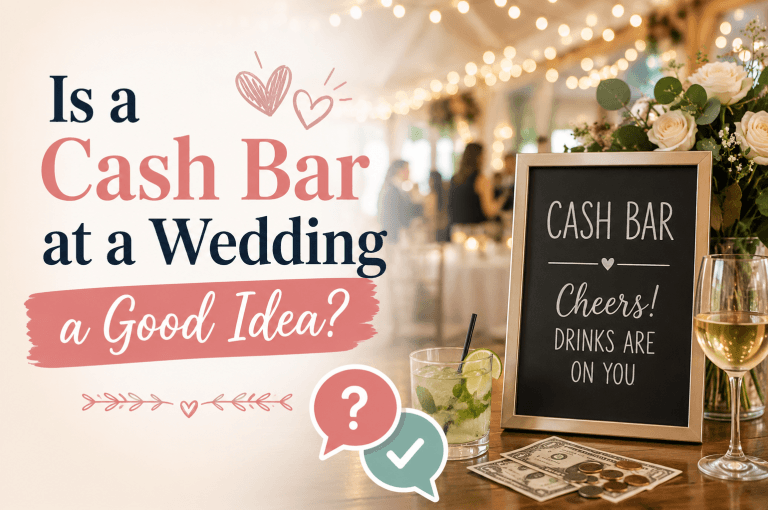
Cash bar
A cash bar means guests purchase their own drinks.
Despite the name, that doesn’t necessarily mean physical cash; depending on the supplier, card payments may be available too.
For couples working within a defined wedding budget, this can be a straightforward option. You might pay for the initial welcome drinks, table wine and Champagne toast, then move to a paid bar for the evening reception.
That gives guests something on arrival and during the meal without requiring you to fund every drink until last orders.
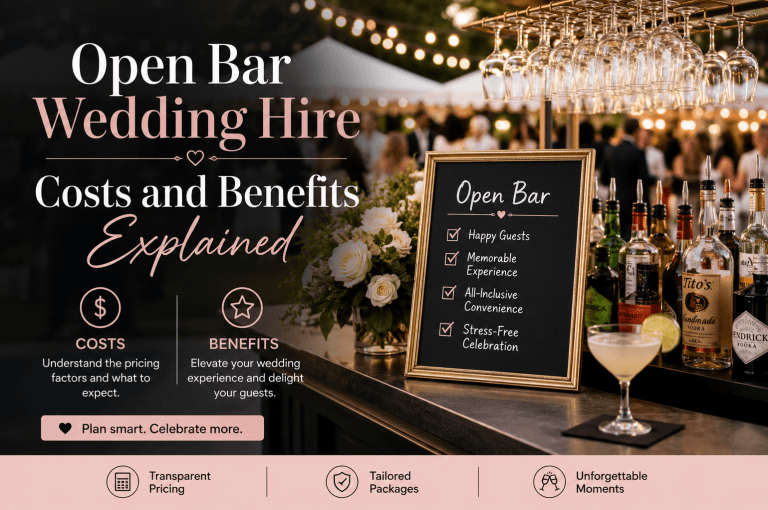
Open bar
At the other end of the spectrum is an open bar, where drinks are paid for by the couple or whoever is hosting the wedding.
It feels wonderfully generous, but it’s important to understand how the arrangement is priced.
Ask whether there is:
- a fixed per-person price;
- an hourly package;
- a predetermined drinks allowance;
- a capped bar tab; or
- an unlimited package with specific exclusions.
“Open bar” can mean different things to different suppliers, so never assume.
Prepaid or capped bar
This can be an excellent middle ground.
You put a predetermined amount behind the bar — perhaps £500, £1,000 or whatever suits your budget — and guests order normally until that allowance has been used.
The bar then switches to a paid service.
It gives you control over spending while still allowing you to buy your guests a few rounds.
Drinks tokens
Another option is to give each adult guest a set number of drinks tokens.
They’re simple, visible and predictable from a budgeting perspective. They can work particularly well at informal or festival-style barn weddings where the atmosphere is already deliberately relaxed.
Whatever approach you choose, make it clear before the wedding.
Nobody wants the first conversation about payment to happen while 30 guests are waiting at the bar.
10. Consider Drinks Packages Instead of Building Everything Individually
There’s something seductive about designing every detail of a wedding yourself.
Then, somewhere around the 14th spreadsheet, it becomes slightly less seductive.
Drinks packages can simplify things considerably.
Rather than separately calculating every glass of fizz, bottle of wine, beer and spirit, a wedding drinks package may combine several parts of the day into one arrangement.
For example:
- welcome drinks after the ceremony;
- table wine during the wedding breakfast;
- sparkling wine for the toast; and
- bar service during the evening reception.
A package can also make costs easier to understand because you’re comparing a complete service rather than individual bottles and glasses.
That doesn’t mean it has to be generic.
Ask whether tailored drinks packages are available and whether you can personalise elements of the menu. You might prefer local ale instead of bottled lager, for example, or replace traditional Champagne with a signature cocktail.
The important thing is to compare like with like.
A cheaper bar package isn’t necessarily cheaper once you’ve added staffing, glassware, ice, refrigeration, setup and the drinks that weren’t included in the original quote.
When comparing wedding bar hire prices, find out exactly what you’re paying for.
11. Work Backwards From Your Guest Numbers
Here’s where wedding bar planning gets practical.
A bar designed for 50 guests doesn’t necessarily work for 150.
The physical bar may look identical, but the service requirements behind it can be completely different.
Your supplier should therefore know:
- approximate total guest numbers;
- number of adult guests;
- number of children;
- expected daytime guests;
- additional evening guests;
- approximate service times;
- whether drinks are being served at tables;
- whether welcome drinks are required; and
- whether you expect particularly busy periods.
Why does this matter?
Because weddings don’t produce a steady stream of customers.
They produce waves.
The ceremony finishes: everyone wants a drink.
Dinner finishes: everyone wants a drink.
The evening guests arrive: everyone wants a drink.
The DJ announces the last song before a break: everyone suddenly remembers they want a drink.
Planning around those peaks is more useful than simply dividing the number of drinks by the number of hours.
How many bartenders do you need?
There isn’t a magic staff-to-guest ratio that works for every wedding.
A straightforward bar serving beer, wine and spirits can generally move faster than an elaborate cocktail bar where every order requires shaking, muddling, garnishing and individual preparation.
Likewise, 100 guests spread between several areas may behave differently from 100 guests gathered in one barn.
The right number of professional bartenders depends on the drinks menu, service style, venue and guest numbers.
Don’t automatically choose the option with the fewest bar staff because it costs less.
Saving money on staffing can become rather less attractive when your wedding photographs contain a permanent 20-person queue.
12. Keep Your Drinks Menu Focused
Wedding drinks menus can become enormous remarkably quickly.
You start with beer, wine and gin.
Then somebody suggests rum.
Then tequila.
Then three types of cider.
Then eight cocktails.
Then shots.
Then somebody’s uncle apparently only drinks one obscure whisky.
Eventually you’ve accidentally opened a small pub.
A fully stocked bar should provide meaningful choice, but meaningful choice isn’t the same thing as stocking everything anyone has ever ordered.
For many barn weddings, a balanced evening menu might include:
- draught or bottled lager;
- ale and/or craft beer;
- cider;
- red, white and perhaps rosé wine;
- Prosecco or sparkling wine;
- gin;
- vodka;
- rum;
- whisky;
- a considered range of mixers;
- two or three cocktails;
- one or two mocktails;
- alcohol-free beer; and
- familiar soft drinks.
You can then add specific favourites that matter to you.
This creates enough variety for most wedding guests while keeping the operation manageable.
It also makes the drinks menu much easier to read.
13. Use Signature Cocktails to Tell a Story
Earlier, we mentioned making cocktails part of the bar experience.
It’s worth going further because bespoke cocktails offer one of the easiest opportunities to personalise a wedding without personalising absolutely everything.
You don’t need your initials printed onto every available surface.
A couple of drinks with a story behind them can do far more.
Perhaps you drank espresso martinis on your first date.
Perhaps one of you always orders a margarita.
Maybe you became engaged in Italy and want a spritz-inspired serve.
Or perhaps there’s a local ingredient that connects the menu to your Yorkshire wedding venue.
Turn those details into personalised cocktails and suddenly the menu has a reason for being there.
Give guests a choice without slowing the bar down
Two signature cocktails is often enough.
For example:
The Countryside Bramble
Gin, blackberry, citrus and a seasonal garnish.
The Barn Door Espresso Martini
Vodka, coffee and coffee liqueur.
Then create an alcohol-free signature serve alongside them.
The exact recipes are less important than the principle: choose drinks that can be made consistently and efficiently for a crowd.
A cocktail requiring 11 ingredients, smoke, three garnishes and a small theatrical performance might look magnificent on Instagram.
It becomes less magnificent when 40 people order one simultaneously.
14. Think Seasonally
Barn weddings change enormously with the seasons.
A sunlit Yorkshire barn in June feels very different from the same venue surrounded by frost in December.
Your wedding drinks can follow that change.
Spring
Think fresh, floral and bright:
- elderflower;
- rhubarb;
- citrus;
- sparkling wine;
- gin;
- botanical flavours; and
- light alcohol-free spritzes.
Summer
This is prime territory for:
- chilled lager;
- cider;
- rosé;
- Prosecco;
- refreshing cocktails;
- cucumber;
- mint;
- berries; and
- plenty of cold non-alcoholic options.
An outdoor bar or horsebox serving a courtyard can be especially effective here.
Autumn
Barns really come into their own in autumn.
The timber, stone and countryside surroundings naturally suit richer flavours such as:
- apple;
- blackberry;
- spiced rum;
- whisky;
- darker ales;
- cider; and
- warming seasonal cocktails.
Winter
Winter barn weddings can feel incredibly atmospheric, particularly once warm lighting, candles and greenery enter the picture.
Consider richer cocktails, good red wine, darker spirits and perhaps a carefully chosen warm welcome drink.
But don’t abandon the classics.
Even in December, plenty of people still want a cold lager.
Seasonality should add to your drinks menu, not dictate it.
15. Make the Bar Look Like Part of the Wedding
Now we can return to aesthetics.
Because once the practical foundations are right, wedding bar styling is where you can have some fun.
The aim isn’t necessarily to make the bar the most decorated thing in the barn.
It’s to make it feel connected.
If the wedding already features natural greenery, soft florals and warm lighting, carry small elements of those details towards the bar.
Simple barn bar styling ideas
Try:
- festoon lights above an outdoor serving area;
- fairy lights around a bar backdrop;
- foliage around a horsebox serving hatch;
- seasonal floral bar decoration;
- a wooden or chalkboard drinks menu;
- personalised bar signage;
- whisky barrels as standing tables;
- lanterns around an outdoor seating area;
- reclaimed timber details; or
- small arrangements using the same flowers as your tables.
There’s a point where “rustic décor” can become a collection of unrelated wooden objects, though.
You don’t need pallets, barrels, hessian, crates, logs, chalkboards and fifteen metres of bunting just because you’re getting married in a barn.
Choose a few elements and repeat them.
Restraint often looks far more considered.
16. Use Lighting to Transform the Bar After Dark
This deserves its own section because lighting changes everything.
A horsebox bar that looks lovely against green fields at 3pm needs to remain inviting at 10pm.
Likewise, an indoor bespoke bar shouldn’t disappear into a dark corner once the main barn lighting is lowered for dancing.
Consider:
- warm festoon lighting;
- discreet lighting beneath the bar;
- illuminated shelving;
- fairy lights;
- lanterns;
- lighting around the drinks menu; and
- safe pathway lighting for an outdoor bar.
The objective isn’t to illuminate it like a supermarket.
You need enough light for guests to see the menu, bartenders to work safely and people to carry drinks without testing the absorbency of their wedding clothes.
Soft, warm lighting can also turn the bar into one of the most atmospheric areas of the venue after sunset.
17. Create More Than One Drinking Moment
For a larger barn wedding, you don’t necessarily need every drink to come from the same serving point.
Think of the day as a sequence of drinking moments.
You might have:
After the ceremony: trays of welcome drinks.
During photographs: a horsebox bar operating outside.
Wedding breakfast: wine and water served at the tables.
Toast: sparkling wine or Champagne.
Early evening: the main staffed bar opens fully.
Later evening: cocktails and spirits become more prominent.
This reduces unnecessary pressure on one service point and gives the day a sense of progression.
It can also help you spend your drinks budget where guests will notice it most.
For example, paying for a beautiful welcome cocktail for everyone may feel more memorable than simply putting the equivalent amount behind the bar later.
18. Don’t Forget Glassware
Glassware is one of those details nobody talks about until there isn’t enough of it.
Then it becomes extremely important.
Ask your mobile bar hire provider whether glassware is included and how glass collection and washing will be managed throughout the reception.
Different drinks may require:
- wine glasses;
- Champagne flutes or coupes;
- pint glasses;
- half-pint glasses;
- highballs;
- tumblers;
- cocktail glasses; and
- specialist glassware for particular serves.
You don’t necessarily need every conceivable glass shape.
A good mobile bar service can often simplify the range without making the drinks feel cheap.
What about plastic?
This may depend on your venue.
Some barn wedding venues restrict glass in outdoor areas, particularly around courtyards, fields or areas used by livestock at other times.
If so, ask about good-quality reusable alternatives.
Again, practical beats precious.
A beautiful crystal glass isn’t particularly useful if the venue won’t let you take it outside.
19. Ask About Ice, Refrigeration and Draught Systems
Ice is not decorative.
It’s infrastructure.
At a summer wedding, a busy bar can use a considerable quantity of it. Cocktails need it. Spirits and mixers need it. Wine and sparkling wine need chilling. Bottled beer and soft drinks need refrigeration.
Likewise, draught beer requires more than simply attaching a tap to a barrel.
If you want beer on tap, ask how the draught system will be supplied, cooled and operated.
Depending on the setup, the bar may require:
- electrical power;
- refrigeration;
- cellar or keg space;
- gas;
- ice storage;
- fresh water; and
- waste-water arrangements.
These aren’t especially exciting questions.
They are, however, the questions that allow all the exciting bits to happen.
20. Check the Barn’s Power and Water Supply
A mobile bar is mobile.
That doesn’t mean it operates through magic.
Before confirming a particular setup, establish what the venue can provide.
Ask about:
Power
Where are the sockets?
What power supply is available?
How far is it from the proposed bar position?
Are other suppliers using the same supply?
Can the venue safely accommodate refrigeration, lighting and other bar equipment?
Water
Is there access to potable water nearby?
Where can waste water be disposed of?
Are there restrictions around drainage or outdoor service areas?
Access
Can the bar trailer or horsebox actually reach the proposed position?
That last question catches people out.
A photograph may show a gorgeous lawn beside the barn, but if the only route to it involves a narrow stone archway, steep bank or soft field, your converted horsebox may not be joining the party.
Measure access before making assumptions.
21. Have a Proper Wet-Weather Plan
There is optimism.
And then there is planning a British wedding with no rain contingency.
If your concept relies on an outdoor horsebox, courtyard bar or garden drinks reception, decide what happens if the weather turns.
That might involve:
- a covered service area;
- moving guests inside while keeping the bar outside;
- a marquee or canopy;
- an alternative indoor bar;
- covered walkways;
- umbrellas;
- temporary flooring; or
- changing the planned drinks reception location.
Think about wind as well as rain.
A light summer shower is one thing. Strong wind can affect signage, glassware, canopies and outdoor furniture.
A good wet-weather contingency doesn’t mean abandoning your dream of an outdoor barn wedding.
It means your Plan B should feel like another good version of the wedding rather than an emergency arrangement invented at 11pm the night before.
22. Check Licensing Before the Wedding Day
Alcohol service isn’t an area where guesswork is helpful.
Depending on the venue and arrangements, the sale or supply of alcohol may need to be covered by the appropriate premises licence or other authorisation.
For certain events in England and Wales, a Temporary Event Notice (TEN) may be relevant where licensable activities aren’t already covered appropriately.
The important point for couples isn’t to become amateur licensing specialists.
It’s to establish who is responsible.
Ask your venue and bar provider:
- Is alcohol service already covered by the venue’s licence?
- What hours are permitted?
- Are there restrictions on where alcohol can be served?
- Who is responsible for any necessary permissions?
- Are there restrictions on music or bar closing times?
- When are last orders?
- Does the supplier carry appropriate insurance?
Get those answers early.
Discovering that your intended bar hours conflict with the venue’s restrictions is much easier six months before the wedding than six days before it.
23. Ask About Corkage Before Supplying Your Own Drinks
Buying your own wine can initially look like an easy way to reduce costs.
Sometimes it is.
Sometimes corkage changes the calculation completely.
A venue may charge for every bottle you supply yourself, while your bar provider may have different rules concerning external alcohol.
Before ordering 120 bottles because you’ve found an irresistible deal, check:
- whether outside alcohol is permitted;
- whether corkage applies;
- who will chill it;
- who will serve it;
- whether glassware is included;
- who deals with leftover bottles; and
- whether supplying it yourself actually saves money once everything is included.
Do the full calculation.
The cheapest bottle isn’t always the cheapest glass served.
24. Think About Last Orders Before Everyone Is Having Too Much Fun
At some point, even the best barn wedding bar has to close.
Find out the permitted bar opening hours and agree a sensible approach to last orders with your supplier.
If the venue has a strict finishing time, simply serving until the final second can create an awkward ending where guests are simultaneously trying to order drinks, collect belongings and find taxis.
A more considered finish can work better.
Last orders are called.
Final drinks are served.
The music gets its big finish.
Guests begin leaving naturally.
The wedding ends like a celebration rather than an evacuation.
And with the practical side of the bar now covered, there’s one final piece of the puzzle: how to pull all these ideas together, choose the right setup for your particular barn wedding and avoid the mistakes couples most commonly make.
25. Decide What Your Wedding Bar Budget Actually Needs to Cover
When couples search for mobile bar hire cost or wedding bar hire prices, they’re often hoping for one neat number.
Unfortunately, bars don’t work quite like that.
The final cost can depend on guest numbers, service hours, staffing, drinks choices, location, bar format and what’s included by the venue.
A simple beer, wine and spirits bar for an intimate wedding is a very different operation from a fully stocked bar serving draught products and bespoke cocktails to 150 guests for ten hours.
So rather than asking only:
“How much does wedding bar hire cost?”
Ask:
“What exactly is included in this price?”
Your quote might need to account for:
- delivery and collection;
- bar setup and breakdown;
- professional bartenders;
- additional bar staff;
- the physical mobile bar;
- refrigeration;
- draught equipment;
- glassware;
- ice;
- garnishes;
- drinks stock;
- card-payment facilities;
- travel;
- waste removal;
- licensing arrangements where applicable; and
- service throughout the agreed bar opening hours.
There may also be a minimum spend depending on the supplier, event and service model.
Compare complete packages rather than headline prices.
A quote that initially looks more expensive may include considerably more.
26. Spend Money Where Your Guests Will Actually Notice It
Wedding budgets have a remarkable ability to disappear.
The trick isn’t necessarily spending more.
It’s spending deliberately.
For the bar, we’d prioritise the things that materially affect the guest experience:
Good staffing.
Nobody remembers that you saved money by having one fewer bartender. They may remember waiting 25 minutes for a drink.
Good drinks.
You don’t need the most expensive bottle on every shelf, but the core selection should be something you’d happily drink yourself.
Enough ice and refrigeration.
Warm white wine is memorable for all the wrong reasons.
A sensible bar position.
A spectacular horsebox hidden behind the catering tent is still hidden behind the catering tent.
A focused cocktail menu.
Two excellent signature cocktails generally beat ten mediocre ones.
Good alcohol-free options.
Every guest should feel catered for.
Once those fundamentals are covered, you can decide whether extras such as elaborate floral installations, illuminated signage or specialist glassware are worth the additional spend.
27. Match the Bar to the Type of Barn Wedding You’re Planning
There isn’t one “best” barn wedding bar.
There is a best fit for your wedding.
For the classic rustic barn wedding
Consider a horsebox bar, wooden bar or reclaimed-timber pop-up.
Pair it with local ale, cider, wine, gin and a couple of seasonal cocktails.
Add restrained greenery, warm festoon lights and simple signage.
For a modern luxury barn wedding
Contrast the rustic venue with a more polished bespoke bar.
Think elegant glassware, Champagne, premium spirits and a tightly curated cocktail menu.
The contrast between old architecture and contemporary styling can be stunning.
For a festival-style wedding
A mobile horsebox bar is almost made for this.
Add outdoor seating, local craft beer, cider, cocktails and alcohol-free drinks. If the venue allows it, the bar can become part of a larger outdoor area with food, music and informal seating.
For an intimate wedding
Don’t assume smaller means you need less personality.
A compact mobile cocktail bar with a highly personalised drinks selection can feel incredibly special for a smaller guest list.
You can concentrate your budget on better ingredients and more personalised service rather than sheer volume.
For a large wedding
Think first about throughput.
A beautiful bar that can only comfortably serve one person at a time may become a problem when 150 guests finish dinner together.
A larger staffed bar, multiple serving positions or carefully planned secondary drinks service may be more important than elaborate styling.
For a summer wedding
An outdoor bar can make the most of the venue’s surroundings, particularly for welcome drinks and the afternoon reception.
Just keep the wet-weather plan close at hand.
For an autumn or winter wedding
Bring the bar into the barn and make lighting part of the design.
Timber, warm lights, darker spirits, red wine and seasonal cocktails can create a wonderfully atmospheric evening setup.
28. Avoid These Common Barn Wedding Bar Mistakes
Sometimes the easiest way to plan well is to know what tends to go wrong.
Mistake 1: Choosing entirely on appearance
Yes, the bar should look good.
But it also has to serve people.
Check service space, storage, refrigeration, staffing and throughput before falling completely in love with the aesthetics.
Mistake 2: Offering too many cocktails
A giant cocktail menu sounds generous.
At a busy wedding, it can slow service dramatically.
Choose fewer drinks and make them well.
Mistake 3: Forgetting alcohol-free guests
“There’s orange juice” isn’t really a drinks strategy.
Give alcohol-free beer, mocktails and other low- or non-alcoholic drinks proper consideration.
Mistake 4: Underestimating busy periods
Average consumption isn’t the same thing as service demand.
Most guests don’t conveniently order at evenly spaced intervals throughout the day.
Plan for the rush after the ceremony, after dinner and as evening guests arrive.
Mistake 5: Putting the bar too far from the party
If guests have to disappear around the side of the building every time they want another drink, the reception can become fragmented.
Keep the bar connected to the social areas wherever the venue allows.
Mistake 6: Ignoring the weather
An outdoor-only plan in Britain is optimistic.
Have an alternative.
Mistake 7: Assuming the venue provides everything
Power, water, glassware, ice, waste disposal, licences and refrigeration shouldn’t be assumed.
Ask.
Mistake 8: Forgetting access
A vintage horsebox bar may fit perfectly in the courtyard.
The more important question is whether it fits through the entrance to the courtyard.
Mistake 9: Comparing prices without comparing inclusions
A low hire price may exclude stock, staffing or equipment.
Compare the whole service.
Mistake 10: Leaving bar planning until the end
Your bar affects layout, power, guest flow, catering, licensing and potentially the venue itself.
Treat it as part of the reception plan rather than a final decorative extra.
29. Ask Your Mobile Bar Supplier These Questions
Before booking a wedding bar hire company, have a proper conversation about how the service will work.
A useful question list includes:
- What type of mobile bar would work best at our barn venue?
- Can the bar operate indoors as well as outdoors?
- How much access space does the horsebox or bar trailer require?
- How much setup time do you need?
- What power supply do you require?
- Do you need direct access to water?
- What happens if it rains?
- How many bartenders would you recommend for our guest numbers?
- What drinks are included?
- Can we create bespoke cocktails or a customised menu?
- Can you provide draught beer or local ales?
- What mocktails and alcohol-free drinks can you offer?
- Is glassware included?
- Who supplies the ice and refrigeration?
- Do you offer cash, prepaid or all-inclusive bar arrangements?
- Is there a minimum spend?
- How are card payments handled?
- Are there additional travel or setup charges?
- Who handles licensing requirements?
- Do you have appropriate public liability insurance?
- What are the planned opening and closing times?
- How are last orders handled?
- Who collects glasses during the reception?
- Who deals with waste and cleanup?
- What exactly is included in the final quote?
You don’t have to interrogate your supplier over a desk beneath a swinging lamp.
But you should come away knowing what will happen.
The best mobile bar service should remove uncertainty, not create more of it.
30. Do a Venue Walk-Through With the Bar in Mind
If possible, visit your barn venue and deliberately imagine it with guests in it.
Not empty.
Not beautifully staged for the venue brochure.
Full of actual wedding guests.
Stand where the bar might go.
Now imagine:
- 100 people leaving the ceremony;
- catering staff moving between tables;
- photographers working;
- children running around;
- guests heading to the toilets;
- people carrying drinks outside;
- the band bringing equipment through;
- evening guests arriving;
- everyone heading towards the dance floor; and
- rain starting halfway through the drinks reception.
Does the proposed bar position still make sense?
Check practical details while you’re there:
- doorway widths;
- gate widths;
- vehicle access;
- turning space;
- ground conditions;
- electrical sockets;
- water points;
- drainage;
- covered areas;
- lighting after dark; and
- distance between the bar and reception.
Take photographs and measurements.
A ten-minute measurement now can prevent a rather uncomfortable conversation involving a horsebox and a doorway later.
31. Plan Your Bar Around the Guest Experience
There’s an easy trap in wedding planning.
You spend so much time looking at the wedding from the organiser’s perspective that you forget what it feels like to attend.
Imagine being one of your guests.
You’ve arrived at a beautiful countryside venue.
Where do you go?
Is somebody offering a welcome drink?
Can you tell where the bar is?
Is there somewhere comfortable to stand?
Can you see the drinks menu before reaching the bartender?
If you don’t drink alcohol, is there something interesting for you?
Can you pay by card?
Do you need to walk outside in the rain for a drink?
Can you carry your glass onto the dance floor?
Is there drinking water available?
These are tiny questions individually.
Collectively, they’re the difference between a bar that simply exists and one that feels effortless.
32. Give Your Bar Its Own Personality — But Keep It Yours
Wedding trends come and go quickly.
One year everyone wants gin.
Then it’s Prosecco walls.
Then espresso martinis.
Then cocktail towers.
Then something else appears on social media and suddenly no wedding is apparently complete without it.
You don’t have to follow any of them.
The most memorable barn wedding bar ideas usually have some connection to the couple.
Maybe that’s a favourite local brewery.
Maybe it’s the cocktail you always order together.
Perhaps it’s Champagne because you love Champagne.
Perhaps it’s excellent Yorkshire ale because your guests would be deeply unimpressed by anything else.
Perhaps it’s a brilliant alcohol-free cocktail because one of you doesn’t drink.
That’s enough.
A wedding doesn’t become personal by attaching your names to every object.
It becomes personal when the choices make sense for you.
33. A Simple Barn Wedding Bar Planning Checklist
Before you sign everything off, run through this checklist.
The bar
- Bar format chosen
- Indoor or outdoor position confirmed
- Vehicle access checked
- Setup and collection times agreed
- Wet-weather contingency confirmed
- Bar styling decided
- Evening lighting considered
Drinks
- Welcome drinks selected
- Table wine arrangements confirmed
- Toast drinks decided
- Draught beer, lager, ale or cider selected
- Wine selection confirmed
- Spirits and mixers confirmed
- Signature cocktails selected
- Mocktails included
- Alcohol-free beer/wine considered
- Drinking water available
- Drinks menu finalised
Service
- Final guest numbers supplied
- Number of bartenders confirmed
- Bar service model agreed
- Payment arrangements confirmed
- Minimum spend understood
- Bar opening hours agreed
- Last orders agreed
Equipment and logistics
- Power requirements checked
- Water requirements checked
- Refrigeration confirmed
- Ice supply confirmed
- Draught system requirements confirmed
- Glassware arrangements confirmed
- Glass collection agreed
- Waste disposal agreed
Venue and compliance
- Venue restrictions checked
- Alcohol licensing responsibilities confirmed
- Relevant permissions discussed
- Insurance checked
- Outdoor glass restrictions checked
- Supplier access agreed with venue
Once those boxes are ticked, you can concentrate on much more enjoyable questions.
Like which cocktail gets named after the dog.
34. Frequently Asked Questions About Mobile Bar Hire for Barn Weddings
What type of mobile bar is best for a barn wedding?
It depends on your venue and style, but horsebox bars, rustic pop-up bars, wooden bars and bespoke indoor bars all work particularly well with barn settings.
A horsebox is excellent when you have suitable outdoor or courtyard space. A pop-up bar may be more practical when you want service inside the barn itself.
The best choice balances appearance with guest numbers, access and service requirements.
Can you put a horsebox bar inside a barn?
Potentially, but it depends entirely on access, available space and the venue’s rules.
Check doorway dimensions, vehicle access, floor suitability and fire/access requirements with both the venue and supplier.
In many cases, positioning the horsebox immediately outside the barn can achieve the same visual effect while being considerably easier logistically.
Can a mobile bar serve draught beer?
Many mobile bars can provide draught beer, lager, ale or cider, but the equipment and facilities vary between suppliers.
If beer on tap is important to you, mention it early so the necessary draught system, refrigeration, keg storage and power requirements can be planned.
How many bartenders do I need for a barn wedding?
There isn’t one universal ratio.
Guest numbers matter, but so do your drinks menu and service style. A straightforward beer, wine and spirits service can be quicker than a cocktail-heavy menu.
Ask your supplier to recommend staffing based on the expected number of guests and likely peak periods.
Should we have a cash bar or open bar?
Either can work.
A cash bar gives you greater budget certainty, while an open bar provides a generous guest experience but needs careful cost planning.
A prepaid tab can offer a useful compromise: you fund drinks up to an agreed amount before the bar switches to guest payment.
How many cocktails should we put on our wedding menu?
Usually, fewer than you’re tempted to choose.
Two or three well-designed wedding cocktails can give guests variety without slowing service.
You can still offer normal spirits and mixers alongside them.
Should a wedding bar offer mocktails?
Yes, we’d strongly recommend including appealing mocktails and non-alcoholic drinks.
Guests choosing not to drink alcohol should have options that still feel celebratory and intentional.
Can we provide our own alcohol?
Possibly, but this depends on the venue and bar arrangement.
Check whether outside alcohol is permitted, whether corkage applies and who will be responsible for chilling, serving and storing it.
What happens if our mobile bar is outside and it rains?
This should be agreed before the wedding.
Depending on the setup, options might include covered service, a canopy, keeping the bar outside while guests remain under cover or having an alternative indoor arrangement.
Never rely entirely on a dry-weather plan for a British wedding.
When should we book a mobile wedding bar?
Once you’ve secured your venue and have a reasonable idea of the date, guest numbers and style of wedding, you can start discussing bar arrangements.
Booking earlier also gives you more time to coordinate access, licensing, drinks choices and venue requirements rather than trying to solve them close to the wedding.
35. So, What’s the Best Mobile Bar Idea for Your Barn Wedding?
There isn’t a single winner.
And that’s rather the point.
The best mobile bar hire ideas for barn weddings aren’t about copying a photograph or choosing whichever bar has the most fairy lights.
They’re about creating something that belongs at your celebration.
For one couple, that might mean a rustic horsebox bar outside a Yorkshire barn, pouring local ale and cider while guests sit in the afternoon sunshine.
For another, it could be a polished cocktail bar inside, serving espresso martinis beneath centuries-old timber beams.
Someone else might want a simple wooden bar, good wine, draught lager and absolutely no fuss whatsoever.
All three can be brilliant.
The strongest barn wedding bars tend to share the same fundamentals:
- they complement the venue;
- they’re positioned where guests naturally gather;
- they have enough staff;
- the drinks menu is varied without becoming ridiculous;
- alcohol-free guests are properly catered for;
- the practical details have been planned;
- there’s a sensible wet-weather contingency; and
- the whole thing feels like part of the wedding rather than an add-on.
Start there.
Then add the horsebox, cocktails, local beer, flowers, festoon lights and personalised touches that make it yours.
Because the bar isn’t simply where your guests go when their glass is empty.
At a great barn wedding, it’s one of the places where the celebration happens.